Self-Storage Checklist: What to Check Before Renting a Unit
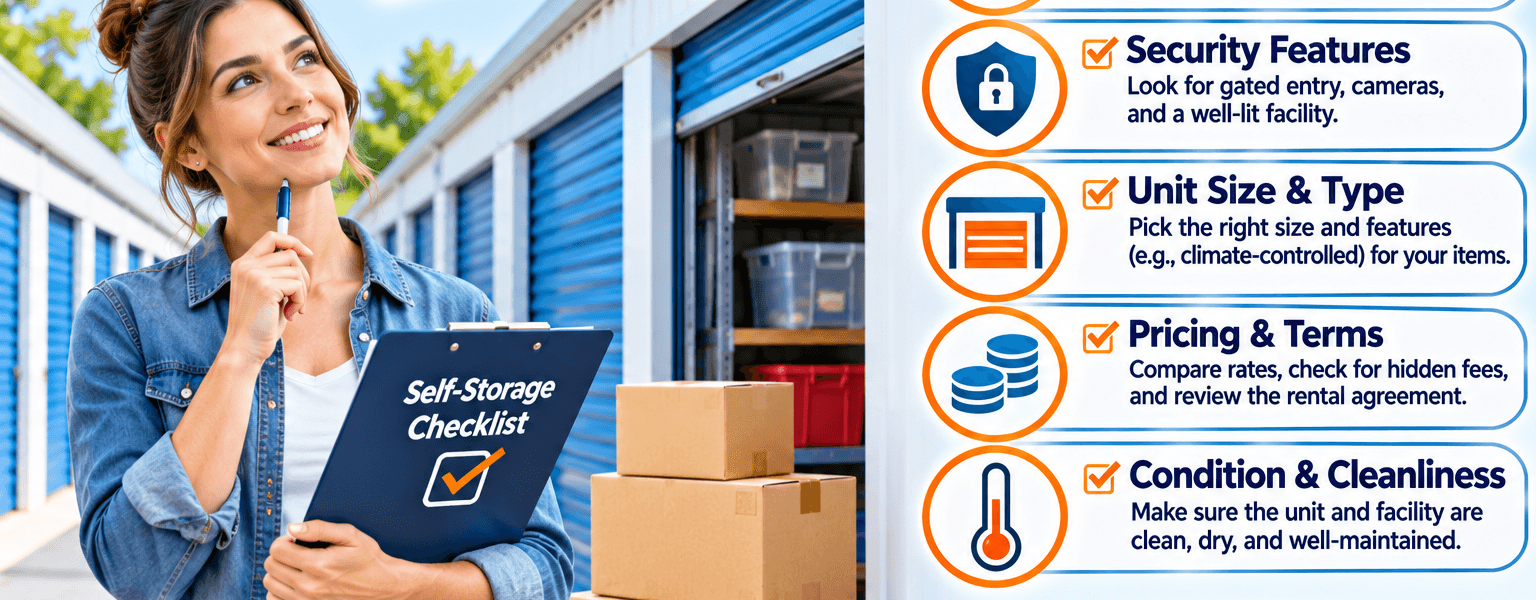
Before renting a storage unit, compare more than price. Check climate control needs, access hours, security features, insurance requirements, and what happens if payments fall behind. A short checklist helps avoid damaged belongings and surprise fees.
Self-storage helps during moves, renovations, downsizing, and business inventory overflow. Here is what to look for.
Unit and Facility Checklist
- Size: estimate needs by listing large items; many facilities offer size guides.
- Climate control: helpful for wood furniture, electronics, documents, and photos.
- Access hours and gate access methods.
- Security: lighting, cameras, gated entry, and on-site staff.
- Drive-up access or elevators for heavy items.
- Pest control and cleanliness of hallways and units.
Contract and Insurance Checklist
- Monthly rate and how often rates can increase.
- Administrative fees, lock requirements, and move-out notice.
- Insurance or protection plan requirements and coverage limits.
- Late fees and the facility’s lien and auction process.
State self-storage lien laws allow facilities to sell contents after a period of nonpayment, following notice requirements that vary by state. Read the agreement carefully and keep contact information updated so you receive notices.
Choosing the Right Size
Renting too large a unit wastes money, while renting too small leads to cramming and damaged items. List large furniture and estimate boxes, then ask staff to recommend a size. Many facilities describe common sizes, such as a five-by-ten unit for a small apartment’s contents or a ten-by-twenty unit for a larger home.
Stack boxes carefully, place heavy items on the bottom, and keep frequently needed items near the door. Using shelves can make better use of vertical space.
Visit the facility before signing, if possible. Check that hallways are clean, lighting works, gates function, and staff are responsive. Ask current renters about their experience if you see them on site. A short visit often reveals more than photos or online descriptions, and it helps you confirm the unit size feels right.
Packing and Protecting Belongings
Use sturdy boxes, label them, and leave a walkway inside the unit. Avoid storing hazardous materials, food, or items prohibited by the facility. Take photos of valuable items and keep an inventory for insurance purposes.
Renters can compare price, security, and access among self-storage facilities on Huddle Directory before choosing a unit. Comparing several facilities there helps renters find the right mix of price, security, and access.
Compare the Whole Picture
Choosing self-storage means checking size, climate control, access, security, fees, insurance, and lien rules. Read the contract, keep contact details current, pack carefully, and document valuable items. Huddle Directory can help you compare storage facilities nearby.
Frequently asked questions
Do I need climate-controlled storage?
Climate control helps protect items sensitive to heat, cold, and humidity, such as wood furniture, electronics, artwork, documents, and photos. For items like garden tools or seasonal gear, standard units may be enough. Consider your local climate and how long items will be stored. Long storage periods favor climate control.
Does homeowners or renters insurance cover storage units?
Some policies extend limited coverage to belongings stored off-site, but limits and exclusions vary. Many facilities also require proof of insurance or offer protection plans. Check your policy and compare coverage before choosing a plan. Compare plan limits carefully. Keep proof of coverage on file.
What happens if I miss storage payments?
Facilities typically charge late fees and may deny access. Under state lien laws, they can eventually sell unit contents after required notices and waiting periods. Contact the facility quickly if you fall behind, and keep your contact information updated. Respond to notices immediately.
What items cannot be stored in a storage unit?
Most facilities prohibit hazardous materials, flammable liquids, perishable food, live animals, and illegal items. Rules vary, so read the rental agreement. Storing prohibited items can create safety risks and may violate your contract. Ask staff when unsure. Read the prohibited items list.

Admin
The huddledir.com editorial team shares practical ideas for local businesses and the communities that support them.