Planning a Commercial Demolition: Permits, Asbestos Surveys, and Utilities
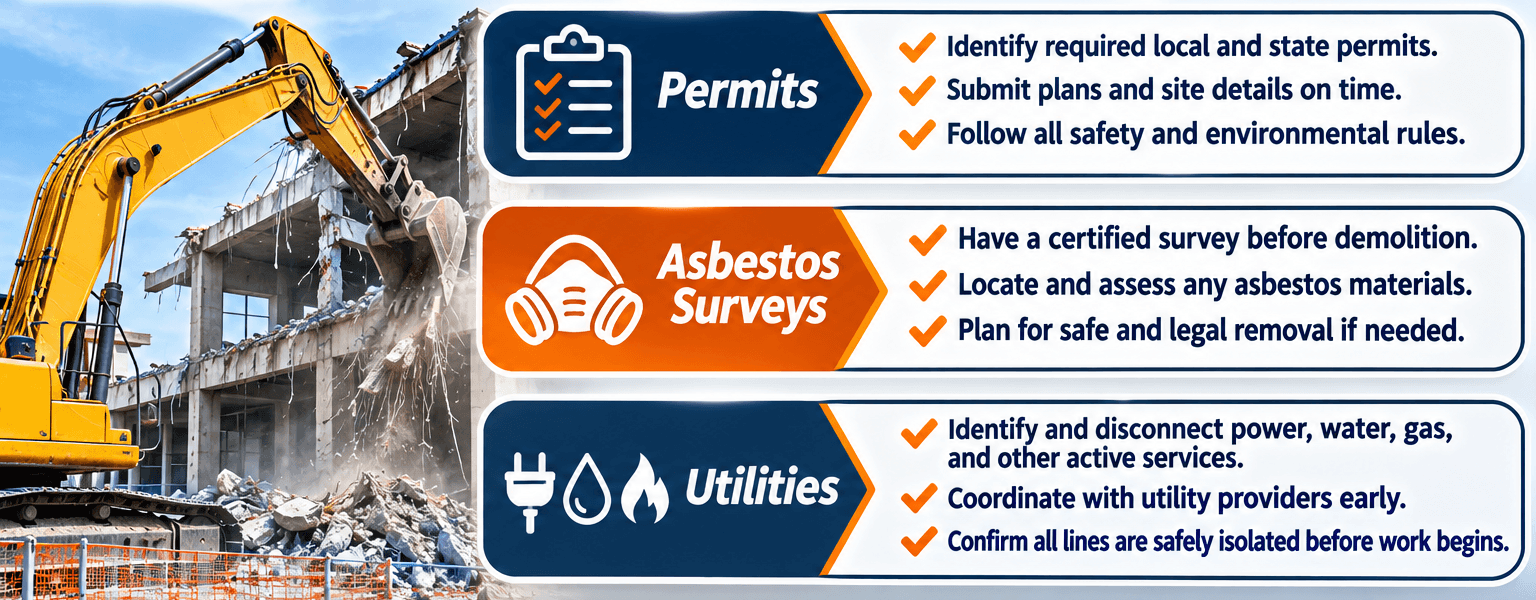
Commercial demolition starts long before equipment arrives. Property owners typically need an asbestos inspection, demolition permits, utility disconnections, and a plan for debris and recycling. Under federal Clean Air Act rules, many demolition projects require an asbestos inspection before work begins, and some require advance notice to the state or EPA.
Planning these steps early helps avoid delays, fines, and safety risks.
Step 1: Surveys and Permits
- Hire an accredited inspector to survey for asbestos-containing materials.
- Arrange abatement by licensed contractors if asbestos is found.
- Check for lead paint, mercury-containing devices, and other hazardous materials.
- Apply for demolition permits with the local building department.
- Submit required notifications to state or EPA programs within required time frames.
Step 2: Utilities and Site Safety
Coordinate disconnection of electric, gas, water, sewer, and communications services with each utility. Confirm disconnections in writing before demolition starts. Install perimeter fencing, signage, and dust controls, and plan traffic management for trucks and equipment.
Contractors should follow OSHA requirements for demolition work, including engineering surveys of the structure’s condition before starting. Ask contractors about their safety programs and experience with similar structures.
Communicating With Neighbors
Demolition brings noise, dust, vibration, and truck traffic. Notify neighbors and nearby businesses before work begins, sharing the schedule, working hours, and a contact number for concerns. Some cities require notice to adjacent property owners.
Dust control, street cleaning, and careful traffic management reduce complaints and keep projects on schedule. Ask contractors how they handle community communication and respond to issues during the project.
After demolition, confirm the site is graded, debris is removed, and any required inspections are completed before construction begins. Keep copies of abatement records, disposal receipts, and permit closeouts. These documents may be needed for future development, property sales, or environmental reviews, and losing them can delay later projects. Store them with your property files.
Step 3: Debris and Recycling
Demolition generates concrete, metal, wood, and other materials. Many can be recycled or reused, which may reduce disposal costs. Ask contractors how they separate materials and document recycling, and confirm disposal at licensed facilities.
Property owners can review experience and safety records among commercial demolition contractors on Huddle Directory before signing. Comparing contractors there helps property owners review experience, safety records, and recycling practices before signing.
Plan Every Step Before Demolition Day
Commercial demolition requires asbestos surveys, abatement when needed, permits, notifications, utility disconnections, site safety plans, and debris management. Choose contractors with strong safety programs and recycling practices, and confirm each step in writing. Huddle Directory can help you compare demolition contractors.
Frequently asked questions
Is an asbestos inspection required before demolition?
Under federal Clean Air Act asbestos rules, many demolition and renovation projects involving regulated facilities require an inspection before work begins. States may have additional requirements. Check with your state environmental agency and hire accredited inspectors. Check state requirements early.
Who handles utility disconnections before demolition?
Property owners or contractors coordinate with each utility provider to disconnect electric, gas, water, sewer, and communications services. Utilities perform the disconnections. Confirm completion in writing before demolition to protect workers and nearby properties. Get written confirmations. Keep copies for your records.
How long does commercial demolition take?
It depends on building size, hazardous materials, permits, and site conditions. Surveys, abatement, and permit approvals often take longer than the demolition itself. Ask contractors for a full project timeline, including pre-demolition steps. Pre-demolition steps take time. Build extra time into schedules.
Can demolition materials be recycled?
Many materials, such as concrete, steel, and some wood, can be recycled or reused. Recycling options depend on local facilities and how materials are separated on site. Ask contractors how they handle and document recycling. Recycling may reduce disposal costs.

Admin
The huddledir.com editorial team shares practical ideas for local businesses and the communities that support them.