
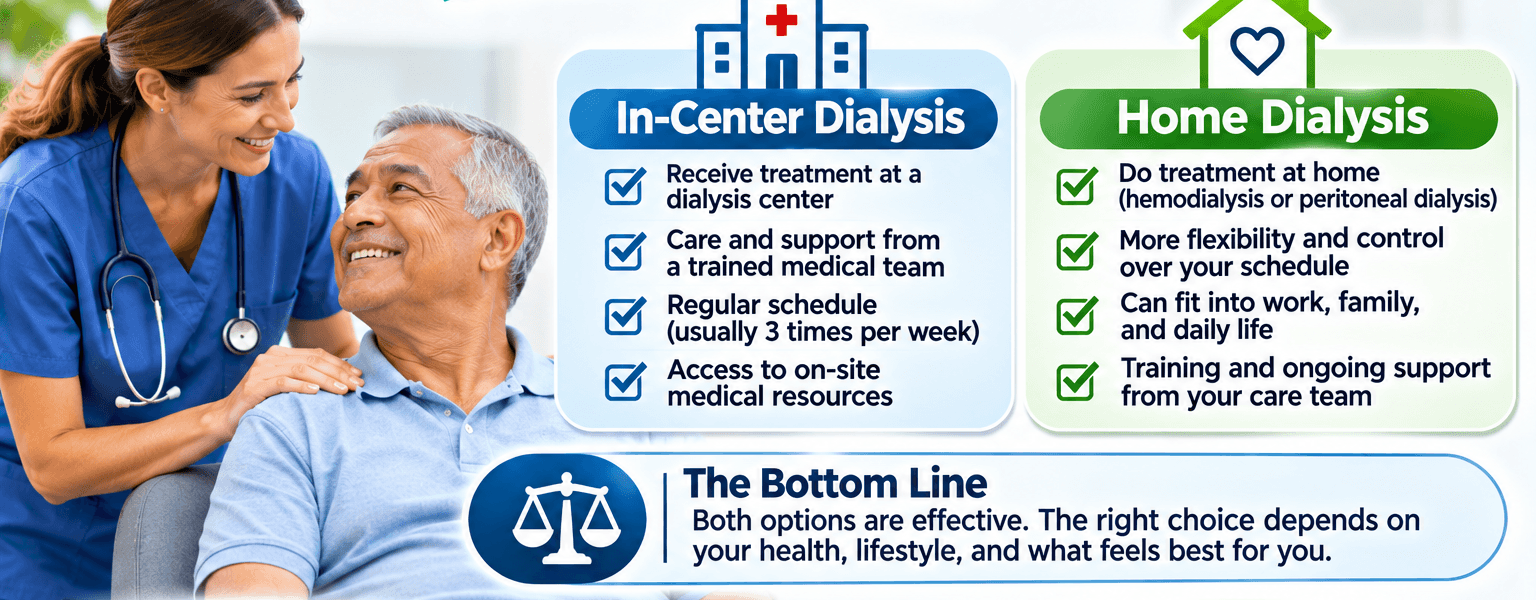
In-Center vs. Home Dialysis: Understanding the Options
People who need dialysis can often choose between in-center hemodialysis, home hemodialysis, and peritoneal dialysis, which is usually done at home. In-center treatment offers staff support and set schedules, while home options can offer more flexibility. The right choice depends on health, lifestyle, home setup, and support from family or caregivers.
Your nephrologist and care team are the best guides. This overview helps frame the conversation.
Three Dialysis Paths Side by Side
- In-center hemodialysis: usually three sessions per week at a dialysis center with nurses and technicians.
- Home hemodialysis: performed at home after training, often more frequently and sometimes overnight.
- Peritoneal dialysis: uses the lining of the abdomen to filter blood, often done daily at home or overnight with a machine.
- Support: in-center provides staff on site; home options rely on training and remote support.
- Space and supplies: home dialysis requires storage space and setup.
Questions to Discuss With Your Care Team
Ask which options are medically suitable, how training works, and what support is available after hours. Discuss how each option affects work, travel, diet, and daily routines. Ask about vascular access or catheter care for each type.
Medicare generally covers dialysis for people with end-stage renal disease who qualify, including home dialysis training. Ask the dialysis provider about insurance coverage and costs before choosing.
Support for Patients and Families
Dialysis affects daily routines, work, and emotions. Most dialysis teams include social workers and dietitians who help with insurance questions, transportation, meal planning, and coping strategies. Patient support groups and kidney organizations offer education and peer connections.
Family members can attend education sessions to learn about treatment options and how to help. Asking for support early makes the adjustment easier.
Ask whether the center offers evening or early morning sessions, which can make working or caring for family easier during treatment. Flexible scheduling can make treatment easier to manage.
Choosing a Dialysis Provider
Visit centers if possible, ask about schedules and transportation, and review quality information. Medicare’s Care Compare tool includes dialysis facility information. Ask how the center supports patients interested in home dialysis or kidney transplant evaluation.
Patients and families can find nearby centers through Huddle Directory’s dialysis and kidney care listings and ask about home training programs. Patients and families can compare locations there and call with questions about schedules and home training programs.
Choose the Option That Fits Your Life
In-center hemodialysis, home hemodialysis, and peritoneal dialysis each have strengths. Discuss medical suitability, training, lifestyle, and coverage with your care team, and review quality information on Care Compare. Huddle Directory can help families compare dialysis providers nearby.
Frequently asked questions
Can everyone do dialysis at home?
Not everyone is a candidate. Home dialysis depends on health, physical ability, home space, and sometimes a care partner. Your nephrologist can explain whether home hemodialysis or peritoneal dialysis is suitable and what training would involve. Ask about training requirements.
How often is in-center dialysis needed?
Many people receiving in-center hemodialysis attend three sessions per week, with each session lasting several hours. Schedules vary based on medical needs. Ask your care team about session length and available time slots. Ask about available time slots. Schedules vary by center.
Does Medicare cover dialysis?
Medicare generally covers dialysis for people with end-stage renal disease who meet eligibility requirements, including home dialysis training and supplies. Coverage rules can be complex, so ask the dialysis provider and Medicare for details about your situation. Social workers can help with coverage.
Can I travel while on dialysis?
Many people travel by arranging treatments at dialysis centers in other locations or bringing home dialysis supplies. Planning ahead is essential. Ask your care team and dialysis center social worker for

Admin
The huddledir.com editorial team shares practical ideas for local businesses and the communities that support them.